
Built With Africa.
Not For It.
Align with Africa is a pan-African luxury house powered by artisans, fueled by storytelling, and scaled through technology that verifies every thread of origin, process, and impact.
Why We Exist
Two problems. One answer.
The world is running on systems built for a fraction of the people now living in them. Too much is controlled by too few. And somewhere along the way, we stopped seeing each other as human.
Align with Africa is built to answer both of those problems at once. Through craft. Through radical transparency. Through a global community of people who believe the world can work differently.
We aren't waiting for permission.
Whether you're a Kenyan artisan applying for a community grant or a founder raising investment in Silicon Valley, the system asks you to prove it before it gives you what you need to prove it. So we are building the proof ourselves: real pieces, made with dignity, paid fairly, traced from first stitch to your door.
The full story of why.
Watch it to understand everything behind what we are building.
The Vision
A Pan-African Luxury House
We begin in East Africa, with artisan cooperatives whose craft has shaped global fashion without credit or compensation. But the vision is continental. Align with Africa is being built as a pan-African platform, one that will grow to represent artisan communities across the continent as relationships and infrastructure develop. Every region has makers whose work deserves a global stage. We are building that stage.
The Model
How Align Works
Co-created, not mass-produced
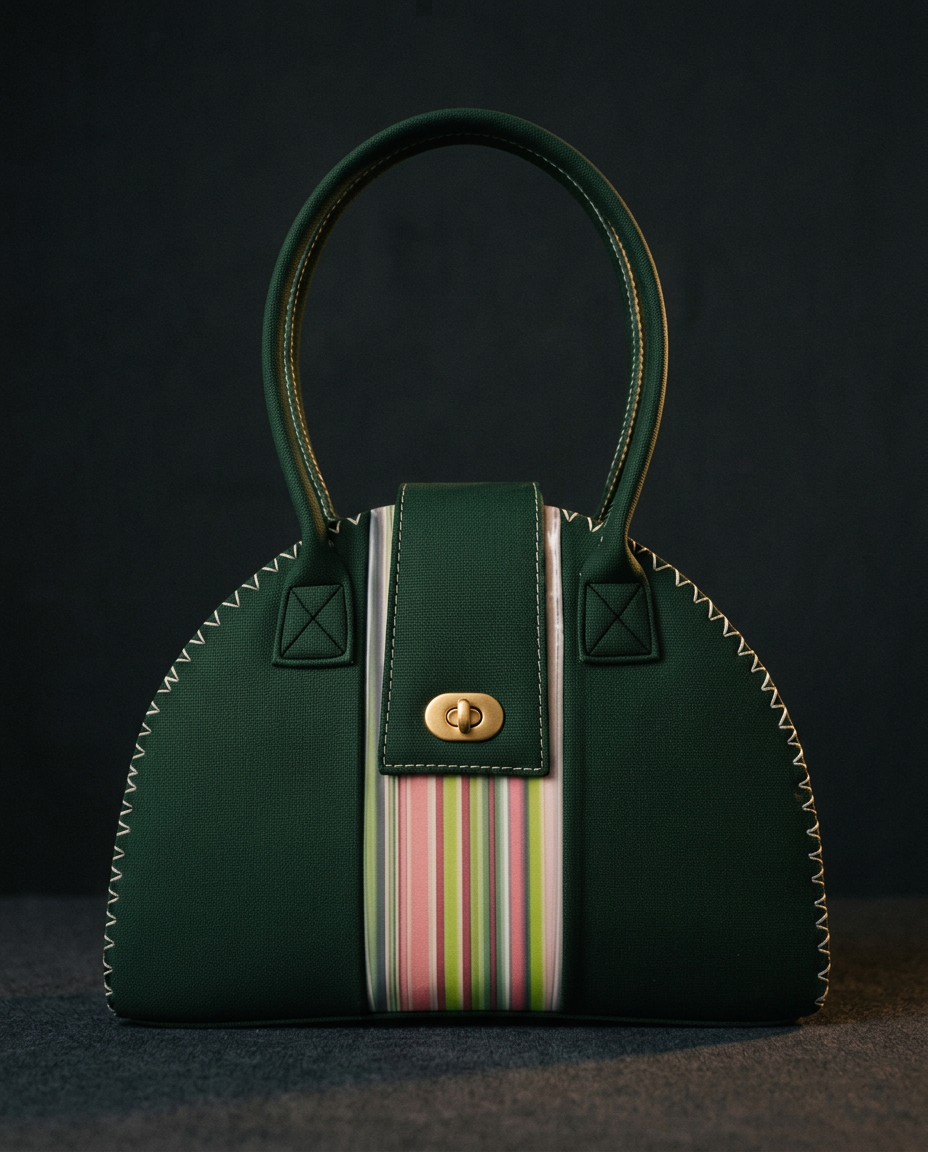
Every piece in our collection is made to order and co-created with its owner. You choose the fabric, the leather, the details. Your piece does not exist until you bring it into being.
Accessories first, then clothing
We launch with made-to-order accessories: bags, scarves, and small goods that carry the full model. Made-to-order clothing is the next chapter, expanding co-creation into garments designed around the person wearing them.
Designed with communities, not for them
Every artisan who works with Align chooses a local organization to receive 20% of each sale. The community reinvestment structure is not a charity layer on top of commerce. It is embedded in how the business works.
The Storytelling
The Story Belongs to the Maker
Align with Africa partners with local filmmakers, photographers, and content creators so the people who make these pieces are the ones who tell their story. We do not arrive with a camera and a narrative already written. We build the infrastructure so the narrative comes from the source. Every update a customer receives during the making of their piece, every video on their product passport, and every image in our collection was produced by someone from the community it represents. This is not a methodology. It is the entire point.
The Artisan Sees the World Their Work Has Reached
Every artisan who works with Align has access to the community space for the pieces they made. When a Carrier posts from Berlin or Kampala or São Paulo, the maker in Nairobi sees it. We built this deliberately. The story of impact should not be told to the artisan second-hand through a report. They should see it in real time, in the faces and cities of the people wearing their work. This is what livelihood amplification actually looks like.
Our supply chains are designed to return value to the point of origin. Artisans are paid before production begins. Community organizations receive their allocation at the moment of purchase. Traceability is not a marketing tool. It is a structural commitment.
We aren't all starting from the same starting point.
But we believe in the same finishing line.
A bot can't buy a bag.
Can't carry one.
Can't pass one across a table and watch someone ask where it came from.
This is human connection, made physical. Carried across the world by people who believe something better is being built.
We aren't breaking anything. We are just building something new.